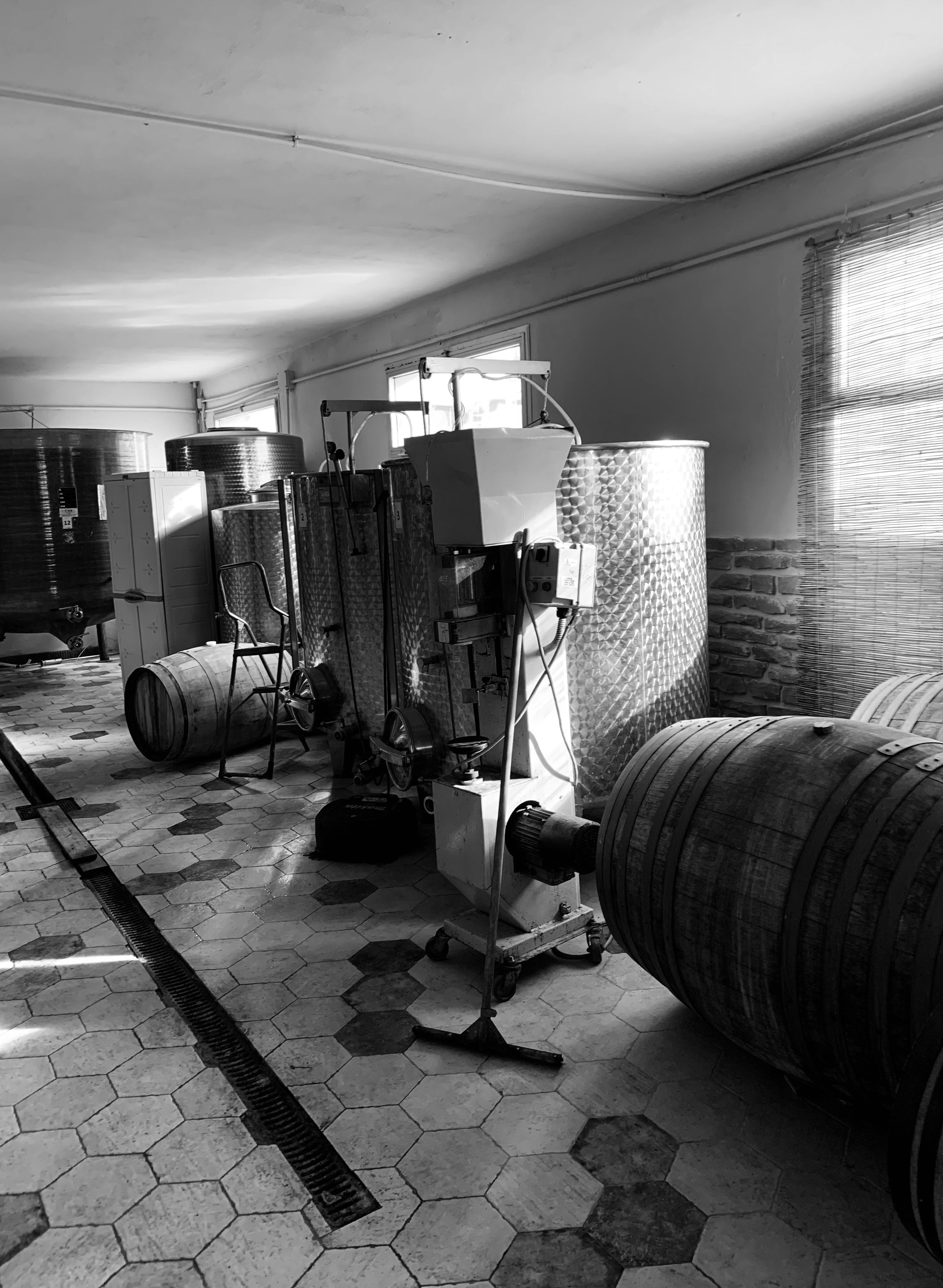
Design for Momentum
Why Most Wineries & Cideries Stall After They Start Producing
(And How to Design for Momentum Instead)
Earlier this week, I received a message that stayed with me.
It said something like this: "You're absolutely right, these are the problems I'm facing. They've been there for years now, and sometimes they're draining my enthusiasm."
What surprised me wasn't the difficulty of the situation, it was the fact that, technically, nothing was wrong. There is production happening, sales happening, the project exists and is moving forward. And yet, it has started to feel heavier than expected.
I encounter this moment too often, where things are working on the surface but momentum feels fragile underneath. Not because of a lack of skill, passion, or effort, and not because anything is actually failing. It's because there isn't a clear structure holding the project together as decisions add up over time.
The Pattern I Keep Seeing
Most producers don't fail because they can't make good wine or cider. They stall because production choices, fermentation decisions, market direction, and their own role in the business weren't intentionally designed together, as a whole, in full alignment.
When it happens, friction slowly appears. Energy drops, confidence becomes inconsistent, and even projects with real potential start to feel draining.
Here's what almost no one talks about: most production projects don't fail because of fermentation issues.
They stall because production, intention, and business were
never designed as a coherent whole.
Let me show you what I mean.
The Three Design Decisions That Determine Whether Your Project Scales or Stalls
Design Decision #1: Production Must Be Designed, Not Improvised
If you don't define the vision clearly, the project will define it for you. What you produce defines your costs, your physical and market constraints, and your margin ceiling. When production evolves reactively, adding products because someone asked, expanding because you had extra fruit, changing formats because you saw what someone else was doing, decisions multiply and consistency suffers. Fatigue increases, confidence diminishes, and the original intention gets buried under the weight of accumulated choices.
The real question isn't "What can I make?" but rather "What do I want this project to support in my life?"
✦ Are you building a lifestyle project or a growth business?
✦ Something you run hands-on forever, or something a team can eventually operate?
✦ Are you creating seasonal income or year-round stability?
✦ Do you prioritize creative freedom or operational simplicity?
These aren't just philosophical questions, they're production decisions. Every product you add, every format you choose, every piece of equipment you buy either supports your vision or slowly erodes it.
Production clarity creates decision relief. When you know what you're building and why, the noise falls away and you stop questioning every choice because you have a framework that holds them.
Design Decision #2: Fermentation Decisions Shape Options, Not Just Outcomes
Here's what most people misunderstand about fermentation mastery: it's not about knowing every answer, it's about knowing which variables to choose intentionally. Fermentation choices influence your timeline, your risks, your flexibility, and your room to pivot.
✦ When fermentation is treated as a reaction, "I'll deal with this when it happens", confidence drops.
✦ When fermentation is treated as a design choice, "I'm choosing this approach because it gives me these options", resilience increases.
Think about wild fermentation versus inoculated starts, aging timelines and vessel choices, intervention points and risk tolerance, carbonation style, batch size and scalability, seasonal or year-round production rhythms.
These aren't just technical decisions, they're strategic ones that determine whether you're locked into a rigid production calendar or have the flexibility to respond to reality as it unfolds. They determine whether every vintage feels like a gamble or a controlled experiment, whether fermentation is the joyful part of your work or the source of constant stress.
Fermentation mastery isn't about controlling every outcome. It's about designing for resilience, creating space for both creativity and consistency to coexist.
Design Decision #3: Business Must Support the Project, Not Lead It
This is the one that breaks most projects. When business pressure leads too early, when you're making decisions based on what you think will sell before you've clarified what you actually want to build, shortcuts appear and compromises accumulate.
The original vision erodes slowly, and you end up serving a business you accidentally created instead of building one that serves you.
But when business is designed around production, when pricing, positioning, and market strategy are built to support the work you actually want to do, everything shifts. Options expand, creativity remains intact, choices feel intentional, and growth becomes sustainable rather than extractive.
A supportive business structure preserves both the project and the person behind it. Because here's the truth most people don't say out loud: burnout isn't caused by volume, it's caused by misaligned roles. When you're doing everything, founder, operator, technician, creative director, salesperson, without clarity about what you love, what drains you, and what must stay in-house versus what can be supported by others, resentment builds quietly. You start feeling guilty for not loving every part of your own project, you feel trapped because "this is what I built," and that's when momentum dies.
What Integration Actually Looks Like
When production, fermentation, and business are designed together, something shifts. Not overnight, but noticeably. Decisions start reinforcing each other instead of creating trade-offs. You feel confident in your choices because they're all speaking the same language. The project stops fighting you and starts supporting you. You're no longer reacting to circumstances, you're building intentionally.
And here's what happens emotionally: you stop second-guessing yourself constantly, you feel proud of the system you've built, the work becomes sustainable both financially and emotionally, and you're creating something others can step into rather than something that only works if you're drowning in it.
This isn't about building more. It's about building something you're proud to stand inside of.
The Path Forward
Over the past months, these conversations led me back to the same conclusion: the producers who get unstuck aren't the ones who found one more technical fix. They're the ones who stepped back and rebuilt the whole system, fermentation, production, and business, so the decisions started reinforcing each other instead of fighting each other.
That's exactly what Fermentation Fundamentals was built to do. It's a 3-month program for producers who already have fruit, trials, or early production in motion, and want to move from reactive troubleshooting to real, intentional mastery in the cellar.
It's not a recipe collection. It's a decision framework, built through 8 modules that take you from protecting your first batch through reading fermentation with confidence, to catching faults early, to speaking about your finished product with real authority.
Is This Right for You?
This may be relevant if you've been feeling:
✦ Reactive rather than intentional, like you're responding to problems instead of building toward something clear.
✦ Your confidence feels inconsistent, strong one week and uncertain the next, especially around which decisions actually matter.
✦ Scattered in focus, producing results but unclear about what deserves your energy and what's just noise.
Whether you're producing wine, cider, mead, maple wine, or fruit wine, the same framework applies. This is a pause worth considering.
What Happens Next
If this resonates, I'd genuinely love to hear where you're at in your project. Bring me your real situation, and I'll tell you honestly whether this is the right next step for you.
Book Your Free Cellar Strategy Session
This is a genuine conversation, where we will look at your situation and you goal and the number one challenge standing in the way. Come with your questions you'll leave with breakthroughs and answers.
Because fermentation should be the joyful part, not the thing holding everything together.
Alexandra Beaulieu is an oenologist, winemaker, and fermentation consultant who has helped wineries, cideries, and craft producers across Canada and abroad design, refine, and scale their fermentation projects for over a decade.

